

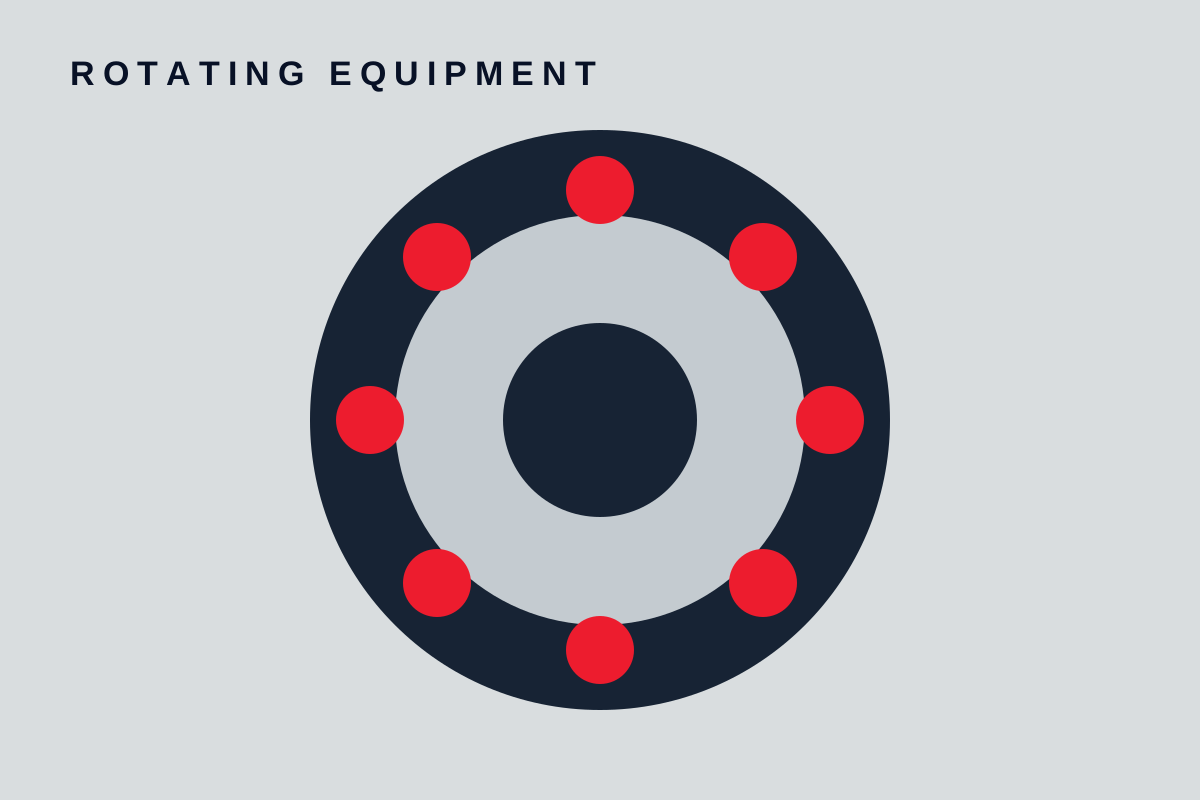
Ball bearings carry load through small contact areas between balls and raceways. Roller bearings use line contact. This basic geometry helps explain their different load capacity, stiffness and friction characteristics.
Load and stiffness
Rollers distribute load over a longer contact zone and generally support higher radial load for a given envelope. Ball bearings often produce less friction and perform well at high speed. Internal geometry determines whether a specific bearing can also carry axial load.
Speed and alignment
Heat generation, cage design and lubricant limit speed. Misalignment can concentrate stress unless the bearing is specifically self-aligning. Housing accuracy and shaft deflection should be included in the selection rather than treated as installation details.
Use catalogue ratings carefully
Dynamic load rating supports fatigue-life calculations, while static rating addresses permanent deformation risk. Actual life also depends on lubrication, contamination, fit, preload, temperature and load spectrum.